



The Age of Revolutions 1790 to 1816
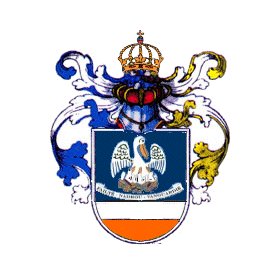
With the unrest in France before 1789, the Vanguard people, due to their close economic ties with the neighboring country, also began to rebel. The issue was less about liberty and fraternity, and more about inequality, as the knights had become wealthy and the peasants and fishermen could do little against the newly imposed prices. Thus, from the spring of 1790 onward, short-lived uprisings broke out in the regions around Caherdaniel, Pontaven, and also around Flourens. The Grand Master sent the knights , who quickly restored peace and order, since one is very quiet without a leader. This was closely observed in France, with the aim of finally expanding their own realm to include the Vanguard island kingdom.

The decision of the Revolutionary Directory in Paris to conquer Vanguardia came overnight, following Napoleon Bonaparte's victory in the Egyptian campaign. They entrusted the conquest of Vanguardia to André Masséna , Duke of Rivoli and Prince of Essling. He embarked with over 34,000 soldiers in Nantes, St. Malo, and La Rochelle. Two days later, the first shots were fired at the fortresses of Montbau and Pontaven. Since many ordinary Vanguardians initially sympathized with the ideals of the revolutionaries in France, it was easy for the French army to conquer town after town.
The Grand Master's regiment was deposed on September 30, 1798 , and the Vanguard Republic was proclaimed as a vassal state of France. This lasted exactly 12 days, for then the Frenchman J.-P. Philibert de Rochet , initially ridiculed as the "Puppet of Prèsenet," was appointed Administrator-General and tasked with reorganizing the administration with departments modeled on the French system. With only around 2,800 officials, he dissolved the centuries-old structures, including parishes, and enforced French law by force of arms and judicial pronouncements. Vanguardia seemed doomed, and many of its sons were forcibly conscripted into the Grande Armée.
According to Wikipedia, the supremacy of the French Empire ended soon after its catastrophic defeat in the Russian campaign. In the subsequent Wars of Liberation, France fought a multi-front war against the other great powers and suffered heavy losses, including the withdrawal of the Grande Armée from occupied and annexed territories. On April 11, 1814, Napoleon abdicated as emperor and went to Elba. After secret arrangements, he returned in March 1815 and once again seized power in France for 100 days. During this time, the constitution of the Empire was significantly liberalized, and a de facto parliamentary monarchy was introduced, even in the Vanguardia region. However, with the Battle of Waterloo in 1815, Napoleon was finally overthrown, and the Empire was dissolved for the second and last time.
The French were subsequently driven out by an Atlantic militia of farmers, fishermen, monks, prostitutes, and gas station attendants. On January 1, 1816, Odol von Arelat —the great-nephew of his sister's paternal cousin—was ceremonially installed as Grand Master, along with the Excellency Silvain Sylvestre, the Procurator General who had been stationed in Rome throughout the French occupation.


Comments